

Application guide
Resin for Roofing Sheet Manufacturing
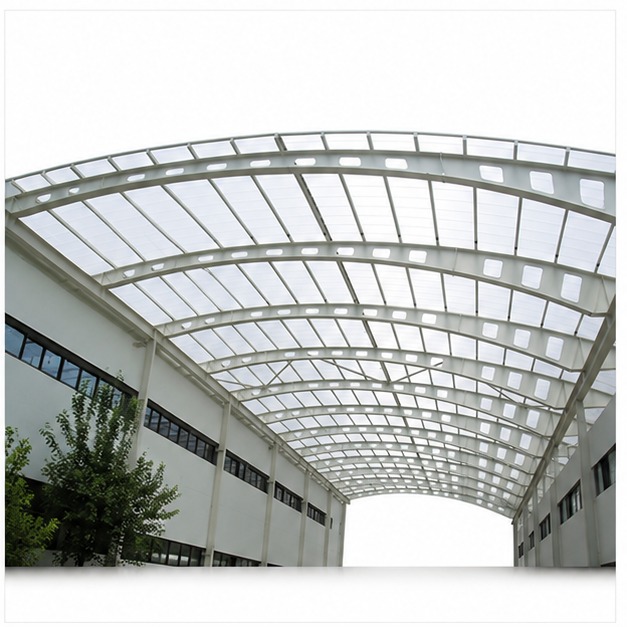
Roofing and cladding sheet manufacturers need even lamination across large panel areas, without pooling or dry patches that weaken the sheet.
Even lamination across large sheet formats.
What manufacturers build
Why this material suits the work
Required resin characteristics
- Low viscosity for fast, even spread across wide, thin sheet moulds
- Fast, consistent gel time to keep a continuous or semi-continuous production line moving
- Reliable room-temperature cure so sheets can be demoulded on a predictable schedule
- Adequate flexural strength for a thin laminate that will carry roof loads and wind uplift
- Batch consistency so sheet thickness and strength don't drift across a long production run
Process context
Advantages
- Sub-8-minute gel time keeps sheet-by-sheet or continuous production moving efficiently
- Low viscosity reduces the labour needed to work resin evenly across wide corrugated moulds
- Non-accelerated cure lets fabricators adjust dosage for ambient workshop temperature through the day
- Steady consumption on a sheet line is easier to plan against one documented grade than against several
Common products
- Corrugated FRP roofing sheets
- Flat FRP cladding panels
- Ridge caps and flashing accessories
- Industrial shed and warehouse roofing systems
Common questions
GP Clear Resin suits standard opaque roofing and cladding sheets. If the sheet needs to transmit daylight — a common requirement for translucent roof-light panels — Samrat FRP Traders' dedicated Roof Light Sheet Grade Resin is formulated specifically for that clarity requirement.
Roofing sheets are typically laminated with E-glass chopped strand mat, laid into the corrugation profile before resin is applied and worked through with a roller.
Roofing sheets are generally thin laminates, which is why a low-viscosity, fast-wetting resin like GP Clear Resin matters — there's less margin for dry patches than in a thicker structural laminate.
It is cured at room temperature with an MEKP catalyst (around 1.5%) and a cobalt octoate accelerator (around 0.4%), with dosage adjusted to suit ambient temperature and the pace of the production line.
Yes. FRP Polyester Pigment can be blended into GP Clear Resin before catalysing to produce coloured sheets, in addition to the standard clear or natural finish.
Need resin for your roofing sheet production?
Get a bulk quote or talk to our technical team about the right grade and dosage for your sheet lamination line.
Contact Samrat FRP Traders