

Application guide
GP Yellow Resin for Water Tank Manufacturing
Water tank panels need a resin that wets out glass reinforcement cleanly and cures into a strong, leak-resistant laminate — GP Yellow Resin's orthophthalic base and MEKP/cobalt cure suit this structural role wherever the tank's exterior is finished over the resin's natural yellow tint.
Consistent laminate behind a finished exterior.
What manufacturers build
Why this material suits the work
Required resin characteristics
- Sufficient working time to roll out chopped strand mat and woven roving across large panel surfaces before the resin gels
- Reliable wet-out of glass reinforcement despite a thicker body than a low-viscosity laminating grade
- Adequate mechanical strength once cured, to withstand the hydrostatic pressure of a full tank
- Room-temperature MEKP/cobalt octoate cure with no special curing equipment required
- Consistent batch-to-batch quality across the multiple resin-and-reinforcement passes used to build up tank wall thickness
Process context
Advantages
- Longer 10–15 minute gel time gives fabricators extra working time across large panel surfaces
- Same non-accelerated MEKP/cobalt octoate cure system as GP Clear Resin — no new dosing procedure to learn
- Working from a single documented grade through a run keeps the laminate consistent from panel to panel
- Consistent 99% purity for predictable batch-to-batch processing
Common products
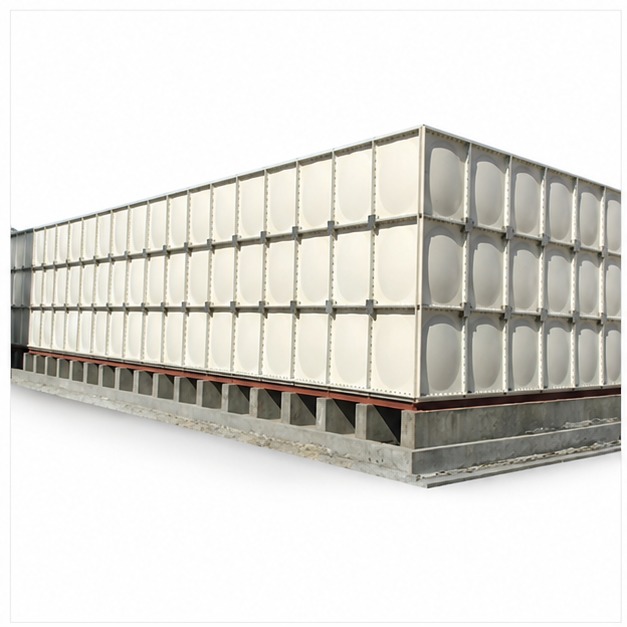
- Bolted sectional panel water tanks
- One-piece cylindrical and rectangular storage tanks
- Underground and overhead water tanks
- Industrial process-water and raw-water storage vessels
Common questions
GP Yellow Resin is a general-purpose orthophthalic resin suited to the structural laminate of an FRP tank, the same role GP Clear Resin plays. For tanks intended to hold potable water, always confirm the complete construction — including any food-grade gelcoat or lining on the water-contact surface — meets the relevant drinking-water standards for your project; the resin's own colour does not affect this requirement.
There is no performance advantage — both are general-purpose orthophthalic resins with the same MEKP/cobalt cure. GP Yellow Resin is simply a thicker, slower-gelling grade with a transparent yellow tint rather than being colourless. Since a tank's structural laminate is rarely the visible surface once the tank is finished, some fabricators use GP Yellow Resin where its longer working time suits larger panel lay-ups, or as an alternative supply option to GP Clear Resin.
GP Yellow Resin is a general-purpose orthophthalic resin intended for standard water storage. For tanks holding aggressive chemicals or requiring higher corrosion resistance, a Vinyl Ester Resin system is the more suitable choice.
Tank walls are typically built up with chopped strand mat, often combined with woven roving for additional strength in larger tanks — the same reinforcement approach used with GP Clear Resin.
It is cured at room temperature with an MEKP catalyst and a cobalt octoate accelerator, the same non-accelerated system as GP Clear Resin. Its 10–15 minute gel time (against GP Clear Resin's under 8 minutes) simply gives fabricators a longer window to work resin into each reinforcement layer — the dosing and lay-up technique itself does not change.
Need GP Yellow Resin for your water tank production?
Get a bulk quote for GP Yellow Resin, or talk to our technical team about whether GP Yellow Resin or GP Clear Resin better suits your tank fabrication line.
Contact Samrat FRP Traders