

Application guide
Epoxy Clear Casting Resin for Jewellery & Decorative Casting
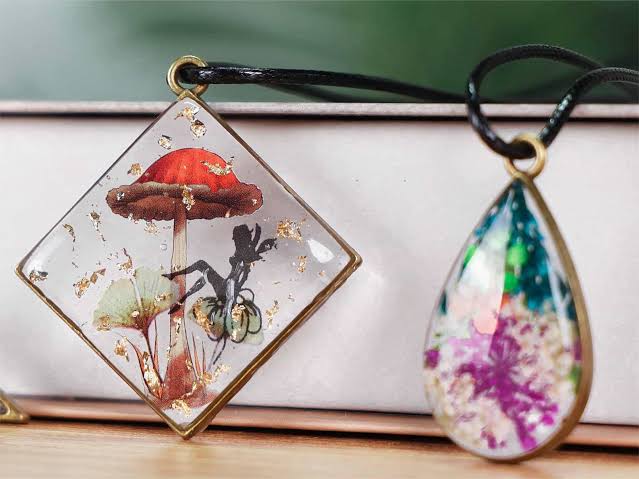
Small silicone moulds for jewellery and decorative pieces need a resin that captures fine detail, releases trapped air in a shallow pour, and cures crystal clear well within Epoxy Clear Casting Resin's medium-depth capability.
Crystal-clear detail in small moulds.
What manufacturers build
Why this material suits the work
Required resin characteristics
- Fine detail reproduction in small silicone moulds
- A pot life long enough to mix, pour and de-gas a small batch before it starts to set
- Crystal clarity that doesn't obscure embedded flowers, mica or small objects
- A viscosity that wets embedded objects without excessive wicking underneath them
- UV-stabilised colour retention for pieces worn or displayed under regular light
Process context
Advantages
- 900 cPs viscosity flows into fine mould detail without excessive wicking under embedded objects
- 40-minute pot life gives enough working time for careful small-batch pouring and bubble release
- Crystal-clear, high-gloss finish suited to pieces meant to be worn or displayed
- Same 2:1 mixing and cure system as larger casting work, so technique carries over directly
Common products
- Pendants, earrings, rings and keychains
- Flower, mica and small-object embedments
- Paperweights and small decorative castings
- Coasters and bottle openers cast in silicone moulds
Common questions
Rarely in practice — most jewellery and small decorative moulds are well under 30 mm deep, so the depth limit that matters for larger work like river tables is not usually a constraint here.
Pour slowly from a slight height rather than dumping resin into the mould, then pass a heat gun or small torch briefly over the surface to release any bubbles that rise. For detailed or multi-layer pieces, pouring in small increments and checking for bubbles between pours gives more control than a single full pour.
Yes. A common technique is pouring a thin base layer, letting it gel slightly, placing the object, then covering it with a second pour — this holds the object in position rather than letting it float to the surface.
It uses a UV-stabilised formulation that resists yellowing significantly better than a standard, unstabilised epoxy. No clear epoxy is permanently immune to gradual colour change under prolonged, intense UV exposure, so pieces worn or displayed in direct sun for years may still show some change.
The same way as a larger pour — resin and hardener are weighed on a scale at a 2:1 ratio by weight, not measured by volume or eyeballed, since accuracy matters as much for a small batch as a large one.
Both are 2:1 epoxy systems suited to small castings. Epoxy Clear Casting Resin is the more general-purpose casting choice; Epoxy Art Resin is formulated specifically for self-levelling flatness, which matters less in a contained silicone mould than it does on an open table-top surface.
Need Epoxy Clear Casting Resin for your jewellery or decorative casting work?
Get a bulk quote for Epoxy Clear Casting Resin, or talk to our technical team about mixing accuracy and bubble control for small-batch pours.
Contact Samrat FRP Traders